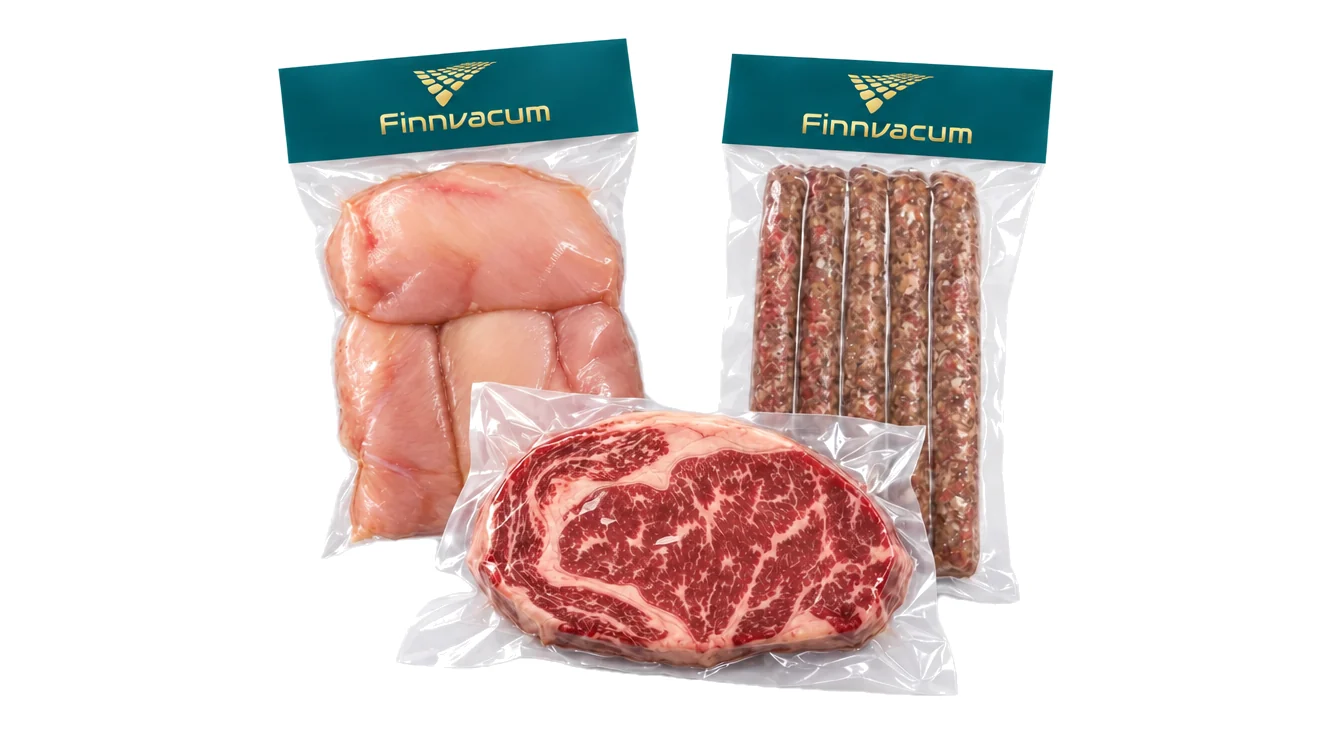
Six causes of vacuum loss
- Puncture. Bones, fins, shells, sharp edges of a frozen product.
- Incomplete seal. Fat, juice or moisture got onto the seal.
- Folds on the seal. The bag lay crooked or folded on the sealing bar.
- Burnt seal. Sealing was too long, and micro-cracks appear at the seal.
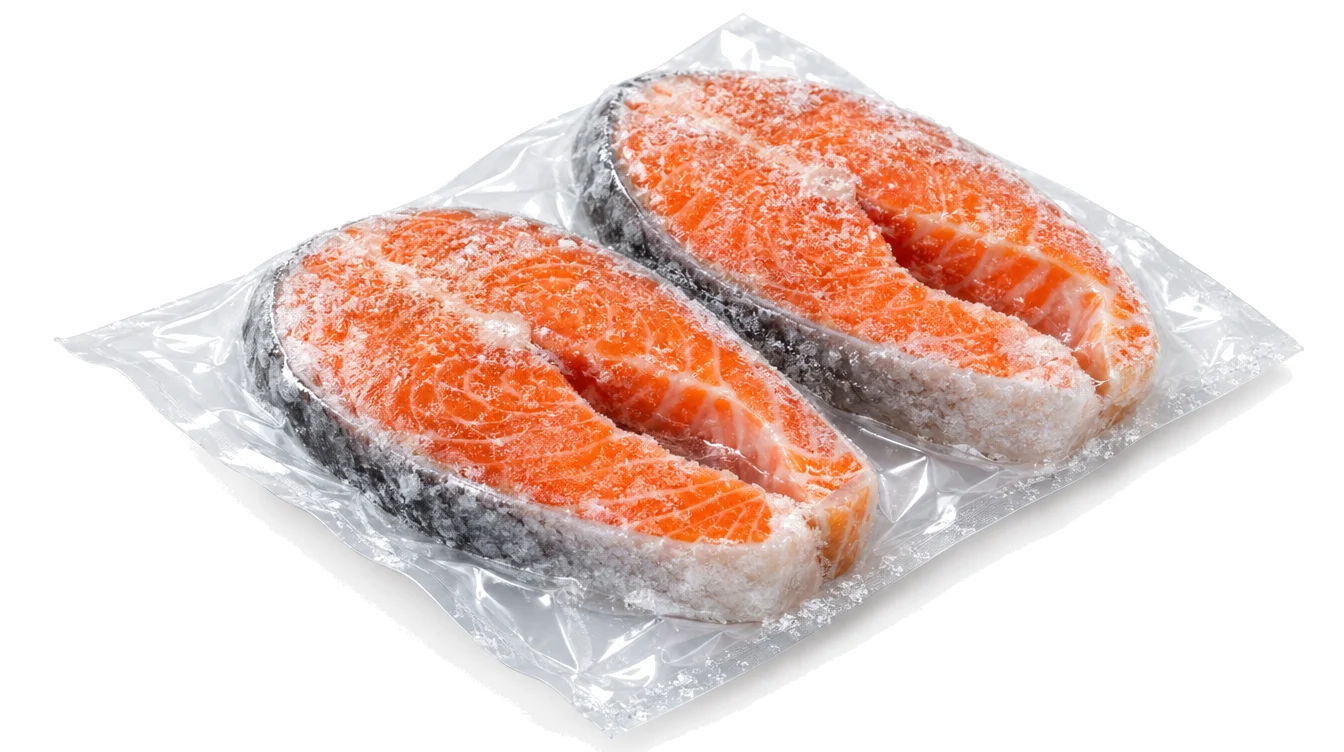
- A bag not made for freezing. In the cold, regular film becomes brittle and cracks.
- The wrong bag size. Too tight for the seal, or empty corners and extra folds.
Punctures: how to find and prevent them
Punctures are the most common problem with meat and fish. To find the spot, put the bag in water and squeeze it gently: bubbles will show the hole. A torn edge points to a puncture by the product or in transit. A neat dot without a visible cause is a reason to send a sample to the bag manufacturer and investigate together.
- For bone-in meat, ribs and frozen fish, use a puncture-resistant bag.
- Cover sharp edges with a board: it also holds the product’s shape.
- Do not fold the edges of the bag when loading: the film cracks at the fold.
- Do not drop boxes with frozen products: an impact in the cold is a frequent source of punctures.
What a good seal looks like
- Even and continuous, without folds, bubbles or unsealed areas.
- Not burnt: the film at the edge of the seal has not flowed out or turned cloudy.
- It tears next to the seal, not along it. Pull the bag apart: a good seal is stronger than the film.
A simple check on the line: once a shift, pull apart a couple of bags and inspect the seal. It is cheaper than a returned batch.
Eight loading rules
- Lay the bag straight, with the seal parallel to the bar.
- One bag per position, not overlapping or stacked: stacked bags seal to each other.
- Keep away from the edge of the bar: the seal is worse at the ends.
- Keep the edge of the bag level with the bar, use inserts.
- The seal area must be dry and clean: no fat, juice or crumbs.
- The whole bag is inside the chamber, and the lid does not press on the product.
- Let bags from a cold warehouse warm up: cold film seals worse.
- With moist products, make sure the liquid does not boil under deep vacuum.
Machine settings: no rushing, no overheating
Too little sealing time — the seal is only partly formed, and the bag “opens” after a few days, especially with fatty products. Too much — the film flows out at the edges of the seal, micro-cracks appear, and the seal breaks in the cold and on impact.
Sealing time is set for the specific bag and machine. Changed the bag — check the settings. The sealing bar and PTFE tape are replaced on schedule: carbon build-up and wear also cause incomplete seals.
Freezing is a test for the bag
When freezing, the product expands and presses on the film from inside, sharp edges cut it, and regular plastic loses its flexibility in the cold. Add temperature changes during transport and thawing. That is why freezing needs a freezer-grade bag, and when choosing it is important to say whether blast freezing will be used.