Why products spoil
To extend shelf life, you need to understand what exactly shortens it for your product. There are usually several causes:
- Oxygen. Fats oxidise, meat darkens, fish and cheese change taste and smell. Most bacteria and moulds also need oxygen.
- Moisture. The product dries out and loses weight — or, on the contrary, releases juice in which microorganisms multiply faster.
- Microorganisms. Bacteria and moulds are present on any raw product. Packaging does not sterilise the product, but it can slow their growth.
- Damaged packaging. A bone puncture, an incomplete seal, a micro-crack in the freezer — and all the protection stops working.
Packaging does not make a product fresher than it was at the moment of packing. It keeps it in that state for longer. That is why the result always also depends on raw materials, hygiene in production and a stable storage temperature.
Which solutions extend shelf life
| Solution | How it works | Which products |
|---|---|---|
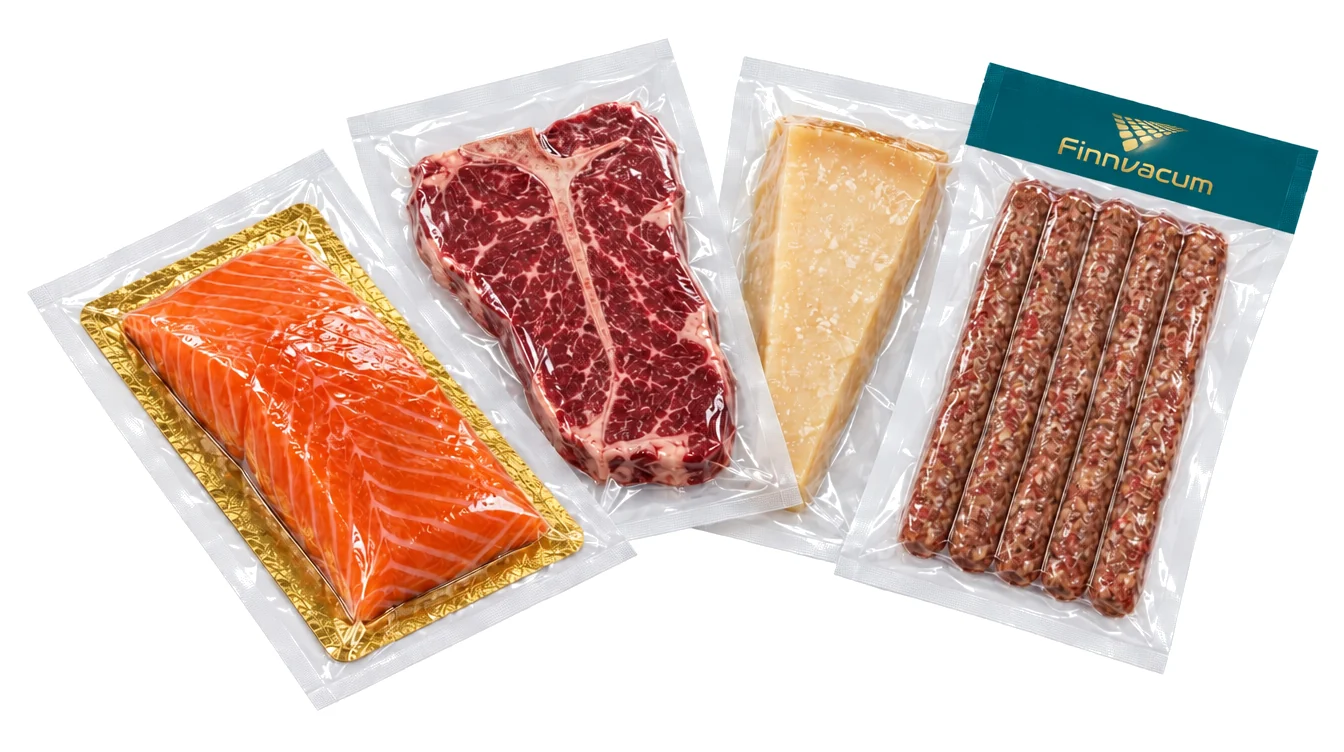
| Vacuum bags | Air is removed from the pack, and the barrier film keeps oxygen from getting back in | Meat, fish, cheese, sausages, semi-finished products |
| EVOH barrier layer | A high-barrier layer in bags and films lets almost no oxygen or moisture through | Long-life products, delicatessen |
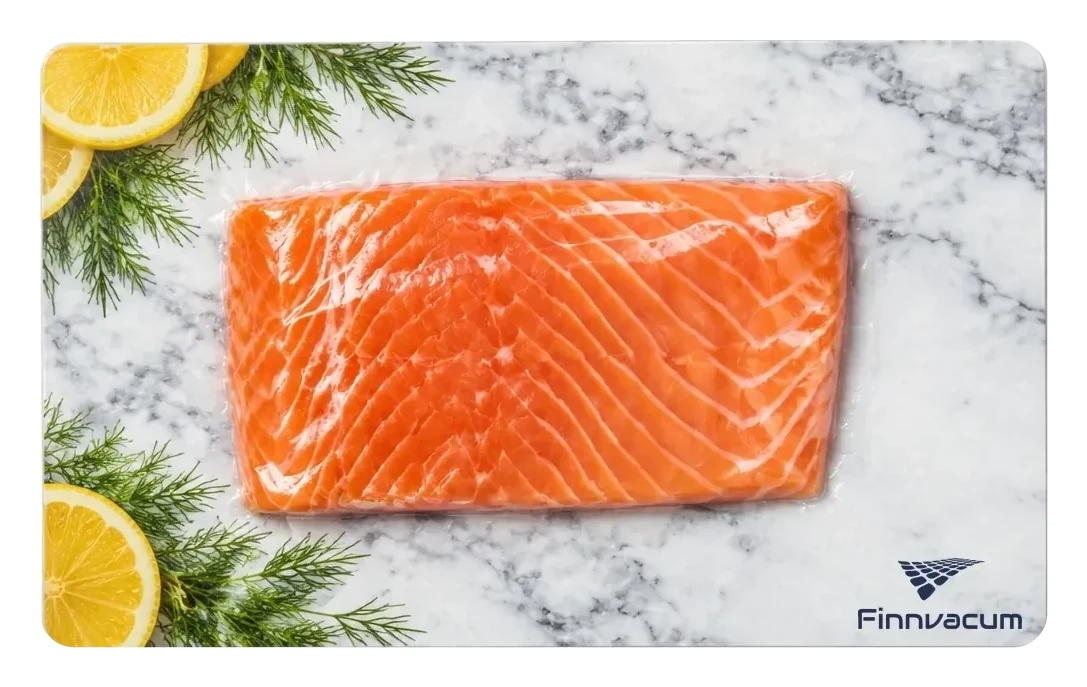
| SKINFRESH skin packaging | The film hugs the product like a second skin: no air pockets or folds where juice collects | Steaks, fish, portioned meat, cheese |
| Modified atmosphere: tray + lidding film | The air in the tray is replaced with a protective gas mix, and the barrier film keeps it in | Minced meat, meat, poultry, ready meals, salads |
| Absorbent pads | Juice goes into the pad layer and does not pool under the product | Meat, poultry, fish in trays |
| CHISTEH active barrier | A biocidal layer based on silver ions suppresses bacteria and mould | Fish, meat, delicatessen, ready meals — in bags, films and boards |
| Perforated films and PVC stretch films | “Breathable” packaging: the product does not suffocate or fog up | Vegetables, fruit, herbs, mushrooms |
Solutions are often combined. For example, meat in a tray with an absorbent pad under film in a modified atmosphere, or a vacuum bag with a CHISTEH layer.
Meat and semi-finished products
The main enemies are oxygen and juice. For chilled meat, vacuum bags, skin packaging and modified atmosphere trays work well. An absorbent pad is placed under the product in a tray so that juice does not pool in the pack. Bone-in meat needs a puncture-resistant bag: one puncture and the vacuum is gone.
Fish and seafood
Fish spoils faster than meat and releases more moisture. Vacuum bags on a Zolotoy List board and skin packaging work well. Freezing requires a freezer-grade film that does not crack in the cold.
Cheese and sausages
For hard cheeses and dry-cured sausages, a barrier against oxygen and moisture matters — barrier vacuum bags are suitable. Mould-ripened cheeses and products that keep “breathing” are not packed in a tight vacuum: the film is chosen separately for them.
Vegetables, fruit and herbs
Fresh vegetables and fruit keep breathing after harvest. In a vacuum or in airtight packaging they spoil quickly. They need breathable packaging: perforated films, PVC stretch film, Chili Pack trays.
Common mistakes
- A weak barrier. The bag looks the same but lets oxygen through — the product darkens before the end of its shelf life.
- A dirty seal area. Fat, juice or crumbs on the seal — and the pack loses its tightness. More in the article why a vacuum bag loses vacuum.
- A film that does not suit the machine. The material is good, but the seal is weak on your equipment.
- Temperature fluctuations. Even the best packaging will not save a product if the cold chain is broken.
How to choose packaging for your product
The shelf life of a product is set by its manufacturer based on studies, so packaging is always tested on the real product. This is how we work:
- You tell us about the product, equipment and the shelf life you need.
- A technologist suggests the material — a bag, film, board or a combination.
- We send samples for a trial on your line and help compare the results.
Leave a request — we will choose packaging that extends the shelf life of your product.