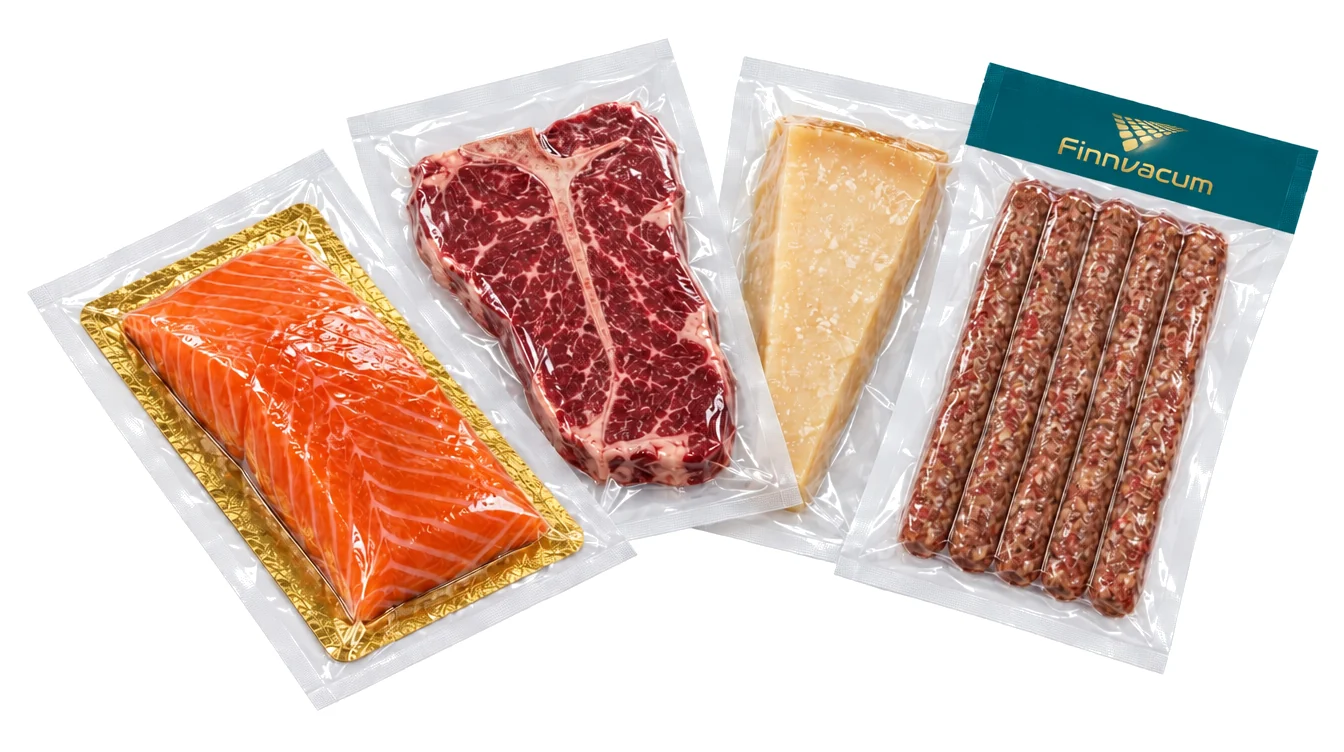
How a vacuum bag is built
A vacuum bag is not a single film but several layers, each with its own job:
- The outer layer provides strength and resistance to punctures and abrasion. It is also the layer that is printed.
- The barrier layer keeps out oxygen and moisture. It determines how long the product will last.
- The sealing layer touches the product and forms the seal: the walls of the bag are welded together by it.
Codes like PET/PE, PA/PE or OPA/PE describe the layers but not whether the bag will cope with your particular product. Two films of the same composition and thickness can behave differently, which is why selection always starts with the task.
From task to bag
| Task | What we choose | What we look at |
|---|---|---|
| Extend shelf life | Barrier bag | Protection from oxygen and moisture |
| Bone-in meat, ribs, fish with fins | Puncture-resistant bag | The bone does not pierce the film during packing and transport |
| Freezing | Freezer-grade bag | The film does not crack in the cold, the seal holds through temperature changes |
| Baking and sous-vide | Oven bag | Withstands the oven and long cooking |
| Fatty and juicy product | A bag for the product and a clean seal area | Fat and juice on the seal interfere with sealing |
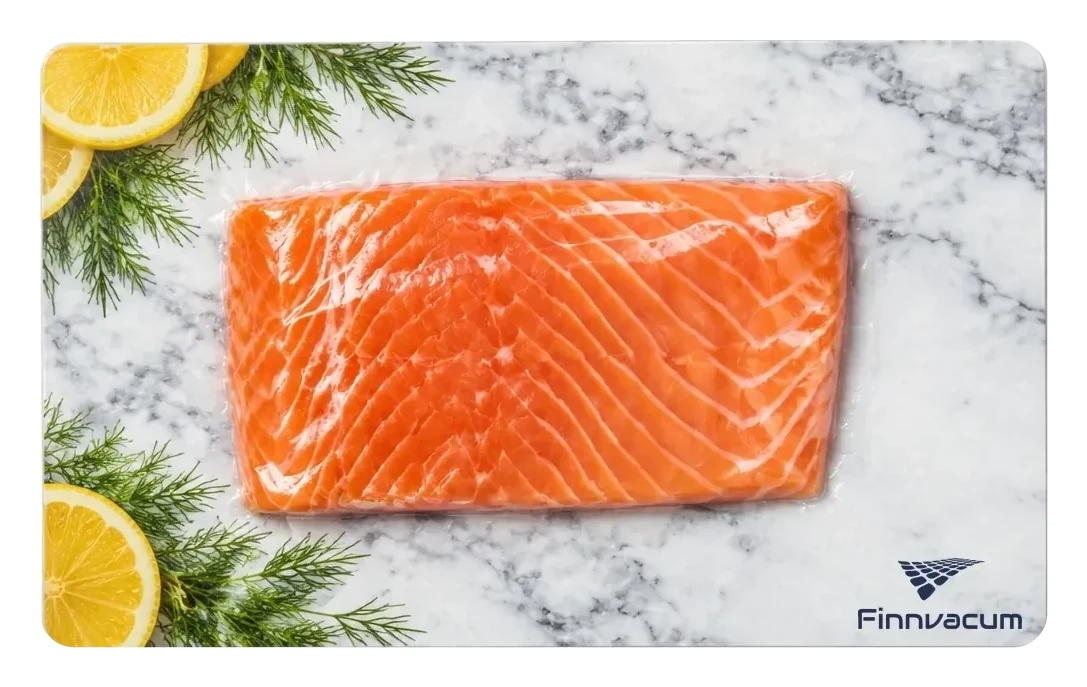
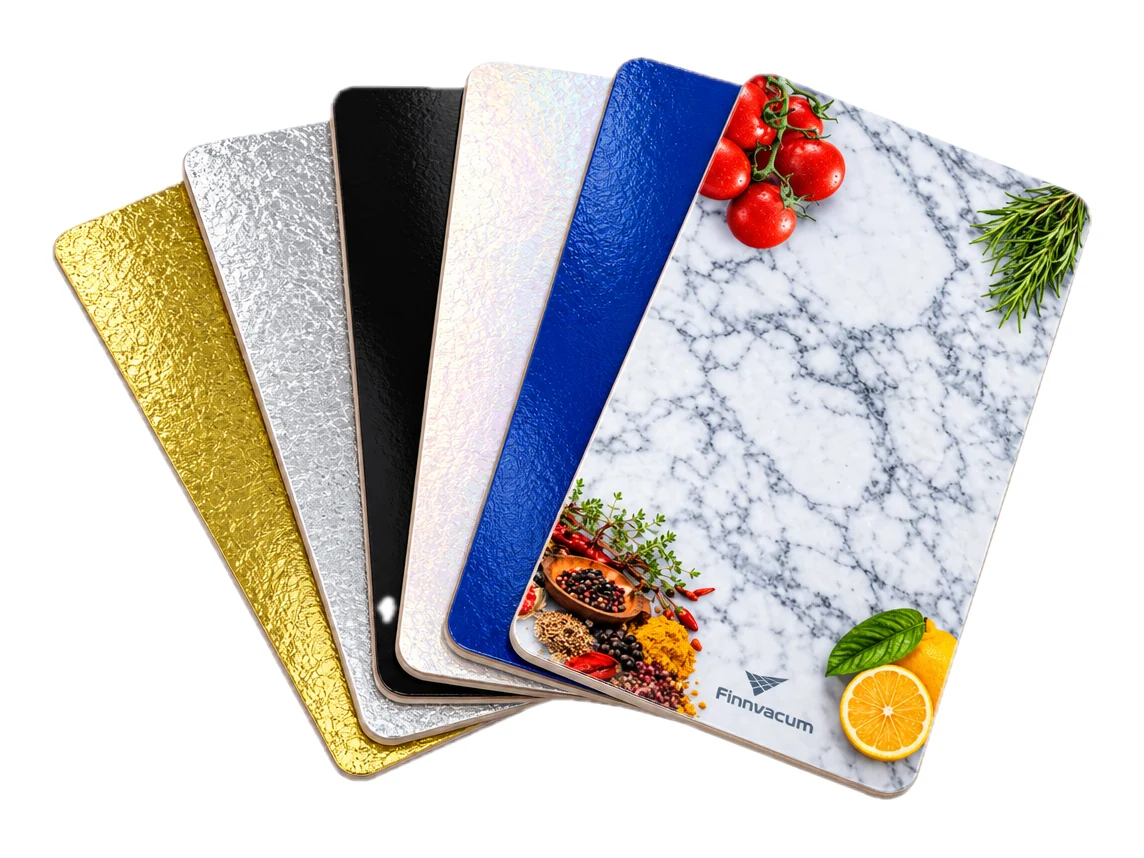
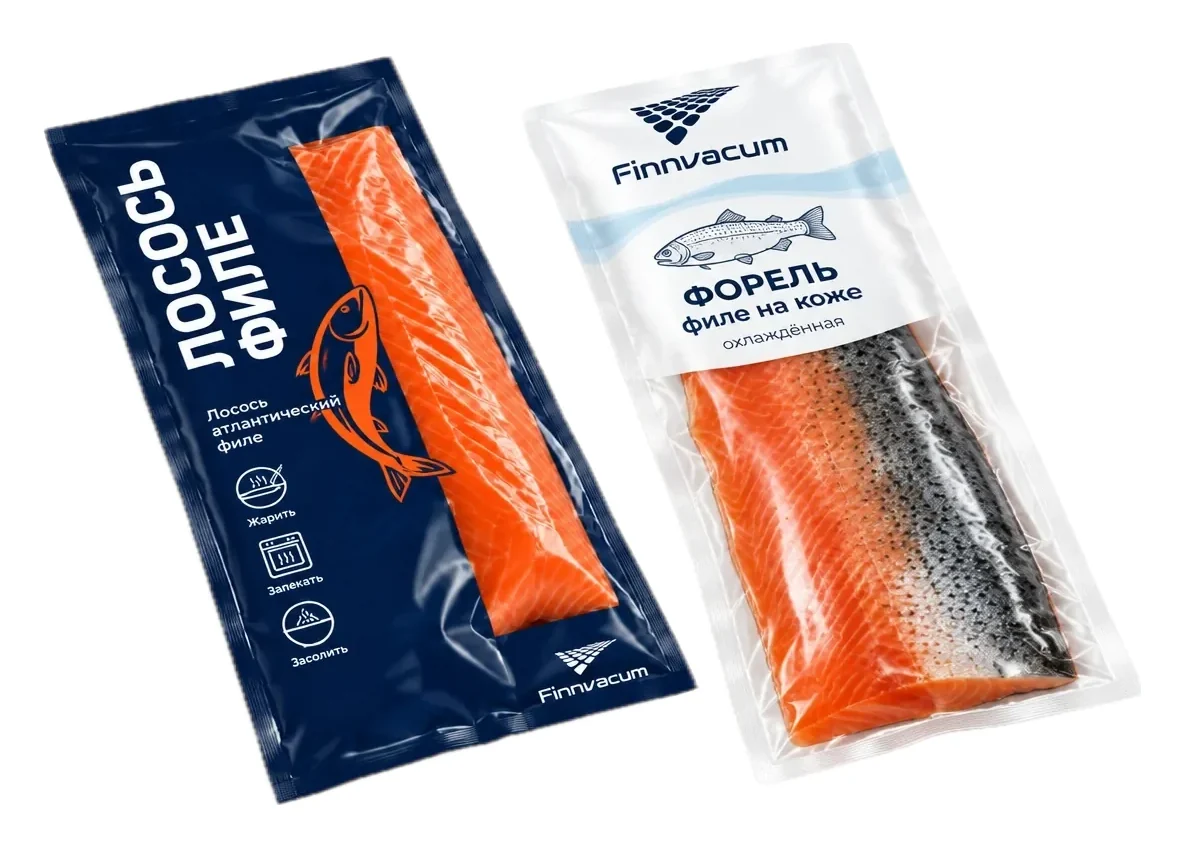
| Product on display | Printing or a board | Full-colour printing, Zolotoy List board, absorbent pad |
Tasks are often combined. Bone-in meat that is later frozen needs a bag that is both puncture-resistant and freezer-grade.
Five questions before choosing the material
- Product. Are there bones and sharp edges, a lot of fat and moisture, what shape is it.
- Storage. Chilled or frozen, what shelf life is needed.
- Processing. Will there be baking, sous-vide or pasteurisation right in the bag.
- Equipment. A chamber machine or a line, what sealing settings.
- Display. Do you need printing, transparency, a board under the product.
Only after these answers are the composition and thickness chosen. Often a thinner bag than the one bought “just in case” is enough: the product is just as protected, and the packaging costs less.
Size: the bag must fit the product
- A tight bag leaves no room for the seal: the film is stretched and tears at the corners.
- A bag that is too big leaves empty corners and folds and makes it harder to remove the air. And you pay for extra film.
- The right bag takes into account the height of the product and a margin for the seal in width and length.
Popular sizes are usually in stock; others are made for the specific product.
When you need not a bag but other packaging
If the product must look premium and not shift on the shelf, consider SKINFRESH™ skin packaging: the film hugs the product and seals to a board. For slices and ready meals in trays, lidding films are suitable.